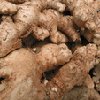
Ginger has a warm, spicy, woody scent with a hint of lemon and pepper. It has a thin consistency and a light yellow colour. The plant is said to originate from India, China and Java, but is also native to Africa and the West Indies. It has been used for medicinal purposes since the ancient times; it is recorded specifically in both Sanskrit and Chinese texts. It is also mentioned in literature from the Greeks, Romans, and Arabians. Ginger oil is believed by aromatherapists to be applicable for colds and flu, nausea (motion sickness, morning sickness) muscle aches (particularly the back), circulation issues and arthritic pain. It also has warming properties that help to combat loneliness, and depression. Ginger is also viewed as an aphrodisiac based on it’s energizing properties. Main constituents of the essential oil (1 to 3% of the fresh rhizome) are mostly sesquiterpenes, zingiberene (up to 70%), ar-curcumene ß-sesquiphellandrene, bisabolene and farnesene. Monoterpenoids occur in traces (ß-phelladrene, cineol, citral). Ginger blends well with bergamot, peppermint, orange, sandalwood, ylang-ylang, and other spice oils.
Cautions: Slightly phototoxic.